
 Written by Ralph Sun
A Late-Cycle Portfolio for a World Where Liquidity Matters More Than Stories
Core thesis of Oracle Capital:
Anti-thematic, durability, pricing power, cash flows, boring stocks.
30% Large cap Biotechnology (Regeneron, Biogen, Gilead Sciences, …)
30% Basic Material Miners (Copper, Aluminium, Gold, Platinum, Palladium, Nickel, Lithium)
5% Oil and Natural Gas
10% Consumer Staples (Costco, CVS, Dollar General…)
10% Shorts (Carvana, Palantir, AppLovin)
15% Discretionary + Value Tech
US Exposure 50%, EM 50% EM stocks: Tokyo Electron, Disco, Kioxia, Japanese exporters, TSM, ASML, Chinese miners, Norwegian miners and seafood, Danish + Swiss + German Biotech. Polish miners and energy.
Exits: All magnificent 7 stocks (Amazon, Microsoft, Nvidia…)
All Chinese tech stocks
All EM stocks that are non-exporters and only operate in domestic markets
-Additionally, no high-beta or small-caps.
Thoughts
This portfolio is constructed for a market where liquidity no longer forgives mistakes. The core thesis is anti-thematic by design. In late-cycle regimes, returns come less from imagination and more from survival. Capital rotates away from long-duration narratives toward businesses that already generate cash, can defend margins, and do not require expanding multiples to justify their existence. “Boring” is not a stylistic preference here. It is a liquidity filter.
Biotechnology as Cash-Flow Infrastructure
Large-cap biotechnology represents the largest single allocation because it sits at the intersection of necessity and pricing power. In a late cycle, demand elasticity matters more than innovation velocity. Companies like Regeneron, Biogen, and Gilead Sciences generate recurring revenues, operate with high margins, and are insulated from consumer cyclicality. Liquidity tends to return to healthcare when growth trades unwind because cash flows are visible and capital intensity is controlled. This is not speculative biotech. It is healthcare as infrastructure.
Basic Materials as Real Assets, Not Trades
Basic materials form the structural hedge against monetary disorder and supply constraints. Copper, aluminium, gold, platinum, palladium, nickel, and lithium are not owned as inflation trades, but as assets whose marginal supply cannot respond quickly to price signals. Late-cycle markets punish overcapacity and reward scarcity. When financial liquidity tightens, physical constraints reassert themselves. Materials are where pricing power migrates once narratives fade and balance sheets matter again.
Energy as a Volatility Hedge
Oil and natural gas remain a small but intentional allocation. Energy is no longer a growth story; it is a volatility dampener. Underinvestment over the past decade has left supply thin, while geopolitical risk keeps marginal barrels expensive. In late-cycle environments, energy provides asymmetric protection when policy errors or external shocks expose how little spare capacity actually exists.
Consumer Staples and the Floor Under Demand
Consumer staples occupy the role of demand stability. Businesses like Costco, CVS Health, and Dollar General benefit from trading-down behavior when consumers feel pressure. Liquidity seeks certainty, and staples offer predictable turnover, strong working-capital dynamics, and the ability to pass through costs incrementally without destroying volume.
Shorts as Liquidity Offsets
The short book is not a macro bet; it is a market-structure hedge. Names like Carvana, Palantir, and AppLovin share a common vulnerability: valuation supported by narrative capital rather than balance-sheet durability. In late cycles, liquidity exits these names non-linearly. Correlations rise, marginal buyers disappear, and what looked like growth optionality turns into refinancing risk.
Discretionary and Value-Oriented Technology
The remaining discretionary and value-oriented technology exposure focuses on businesses that benefit from technological diffusion rather than capital expenditure booms. As AI and automation mature, second-order beneficiaries with established customer bases and disciplined cost structures outperform the platform builders that required abundant liquidity to scale. This is technology after the gold rush, not during it.
Geographic Balance and External Liquidity
The portfolio is deliberately split between U.S. and non-U.S. exposure. Emerging and export-oriented markets often absorb excess global liquidity later in the cycle, particularly when domestic growth narratives in the U.S. begin to fracture. Exposure includes Japanese semiconductor equipment and exporters such as Tokyo Electron, Disco, and Kioxia, alongside foundry and tooling monopolies like TSMC and ASML. Resource producers in China, Norway, and Poland, as well as biotech leaders across Denmark, Switzerland, and Germany, add exposure to regions where valuation discipline and export revenues matter more than domestic narratives.
Exits: Where Liquidity Leaves First
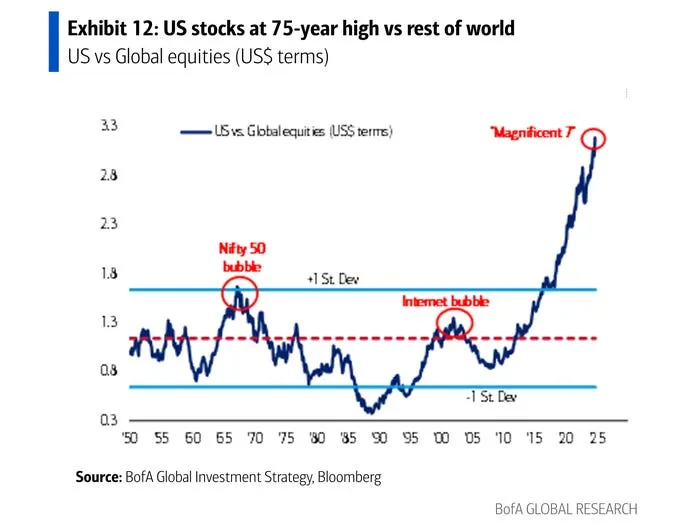
The portfolio explicitly excludes mega-cap momentum leaders such as Amazon, Microsoft, and Nvidia. These names are not weak businesses; they are crowded balance-sheet assets. In late-cycle conditions, they function as liquidity reservoirs. When capital needs to be raised quickly, institutions sell what they can sell, not what they should sell. Mega-caps with deep derivatives markets and passive ownership become the first source of cash, regardless of fundamentals. That dynamic caps upside and amplifies drawdowns when correlations rise.
High-beta and small-cap equities are also excluded. In tightening liquidity regimes, they suffer from a double bind: higher discount rates compress valuations while thinner trading volumes turn modest selling into disorderly price action. Late cycles are hostile to assets that rely on marginal buyers, refinancing windows, or optimistic forward projections. This portfolio avoids areas where exit liquidity disappears precisely when it is most needed.
Closing
This is a portfolio designed to endure a liquidity-driven unwind in a highly stagflationary environment Late cycles, sadly, do not reward brilliance.