
 Written by Cenk Hasan Ozdemir
ASML, TSMC, and Cerebras are all saying the same thing in different dialects.
For the last two years, the easiest way to dismiss the AI boom was to call it a narrative. That was never entirely wrong. Markets always begin by overpaying for language before they learn how to price reality. But this week’s signals from the semiconductor stack suggest the trade is crossing a line. The interesting question is no longer whether investors believe in artificial intelligence. It is whether they are now staring at the first durable industrial buildout of the AI era.
The evidence did not arrive from one company. It arrived from the whole chain. ASML reported first-quarter 2026 net sales of €8.8 billion, gross margin of 53.0%, and net income of €2.8 billion, while raising its expected 2026 total net sales range to €36 billion to €40 billion. Reuters framed the same update alongside TSMC’s numbers as a sign that the AI spending boom is intact. Meanwhile, TSMC reported first-quarter EPS of NT$22.08, and Reuters said its quarterly profit jumped 58% to a record. Then, on Friday, Cerebras announced that it had publicly filed for an IPO, while The New York Times reported that the company generated $510 million in 2025 revenue, up from $290 million in 2024.
What makes this moment different is that every layer of the stack is being forced to commit at once. The software story says intelligence is becoming abundant. The hardware story says scarcity is becoming expensive. AI models may feel weightless to users, but nothing about the current boom is light. Training and inference still require chips, networking, cooling, electricity, packaging, and manufacturing capacity. That means the winning companies are not simply the ones with the best demos. They are the ones that can survive contact with physics.
That is why ASML matters more than most market commentary admits. You can fake enthusiasm in venture decks and earnings calls; you cannot fake demand for lithography tools at scale. When a company sitting that far upstream raises guidance, it tells you customers are not merely talking about AI deployments. They are making capital commitments that presume multi-year demand. The market keeps trying to narrate AI as if it were a software rerating. It increasingly looks more like a capital cycle with code attached.
TSMC tells the same story from a different angle. Foundries do not get paid for vibes. They get paid when customers reserve real capacity for advanced nodes, and TSMC’s own release said first-quarter revenue rose 8.4% quarter over quarter while net income rose 13.2% quarter over quarter. The company sits at the uncomfortable center of the global technology system: essential to AI, exposed to geopolitics, and impossible to replace quickly. When TSMC posts numbers like these, it is not merely a bullish datapoint for semiconductors. It is evidence that the AI economy is increasingly being written into the strategic balance sheet of the world.
Cerebras is the most revealing piece of the puzzle precisely because it is not yet a consensus winner. The significance of its filing is not that public markets have found their next Nvidia. They almost certainly have not. The significance is that AI infrastructure companies now believe public investors are ready to fund a deeper and riskier layer of the stack. That matters because it marks a transition from speculative enthusiasm around incumbents to financing capacity for challengers. Once that starts happening, booms stop being rhetorical. They become institutional.
There is a broader market implication here. The old critique of the AI trade was that valuations had detached from monetization. That critique still has force at the edge of the market, where every dashboard and wrapper wanted an AI multiple. But the center of gravity has shifted. The most important current question is not whether every AI product will justify its valuation. It is whether the infrastructure layer is becoming so strategically necessary that markets will tolerate years of oversized capital expenditure, bottlenecks, and margin pressure in exchange for eventual control points.
In other words, investors may have stopped asking whether AI is real and started asking who gets to own the toll roads.
That also explains why this cycle increasingly looks geopolitical. ASML is European. TSMC is Taiwanese. Cerebras is American. The actual AI stack is global, but the scramble to control it is national. Export controls, industrial subsidies, energy policy, and financial-market access are all being folded into what is supposedly still called the tech sector. It is not just the next internet. It is a strategic reordering of manufacturing, capital allocation, and state power.
The most important market error now would be to keep treating AI as a conventional growth theme. Conventional growth themes do not need fabs, sovereign backing, transmission infrastructure, and a public-market exit path for second-tier hardware challengers. Those are the features of an industrial mobilization. The winners will not just have better products. They will have deeper access to capital, better political insulation, tighter supply relationships, and greater tolerance for the brutal economics of scale.
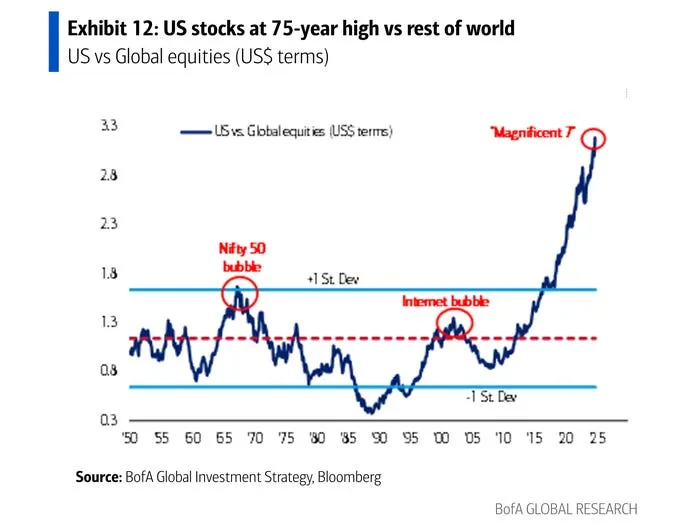
That does not mean the boom is invulnerable. It means the nature of the risk has changed. The danger is less that AI was imaginary and more that it is real enough to trigger overbuilding, geopolitical chokepoints, and concentration risk across the entire hardware chain. Manias are dangerous partly because they are often built on truths. Railways were real. The internet was real. What wiped out weak capital was not fantasy but excess conviction layered on top of something transformative.
This is why the latest batch of headlines matters. ASML’s raised outlook, TSMC’s record quarter, and Cerebras’ IPO filing do not prove that every AI stock deserves to levitate. They prove something more important: the boom has escaped the PowerPoint stage. It is now embedded in machinery, earnings, and capital markets.
That is when narratives become systems. And systems are much harder to unwind than hype.