 Written by Ralph Sun
When a failed sneaker brand can slap “AI” on its name, promise a $50 million pivot into compute, and watch its stock explode, investors are not pricing innovation.
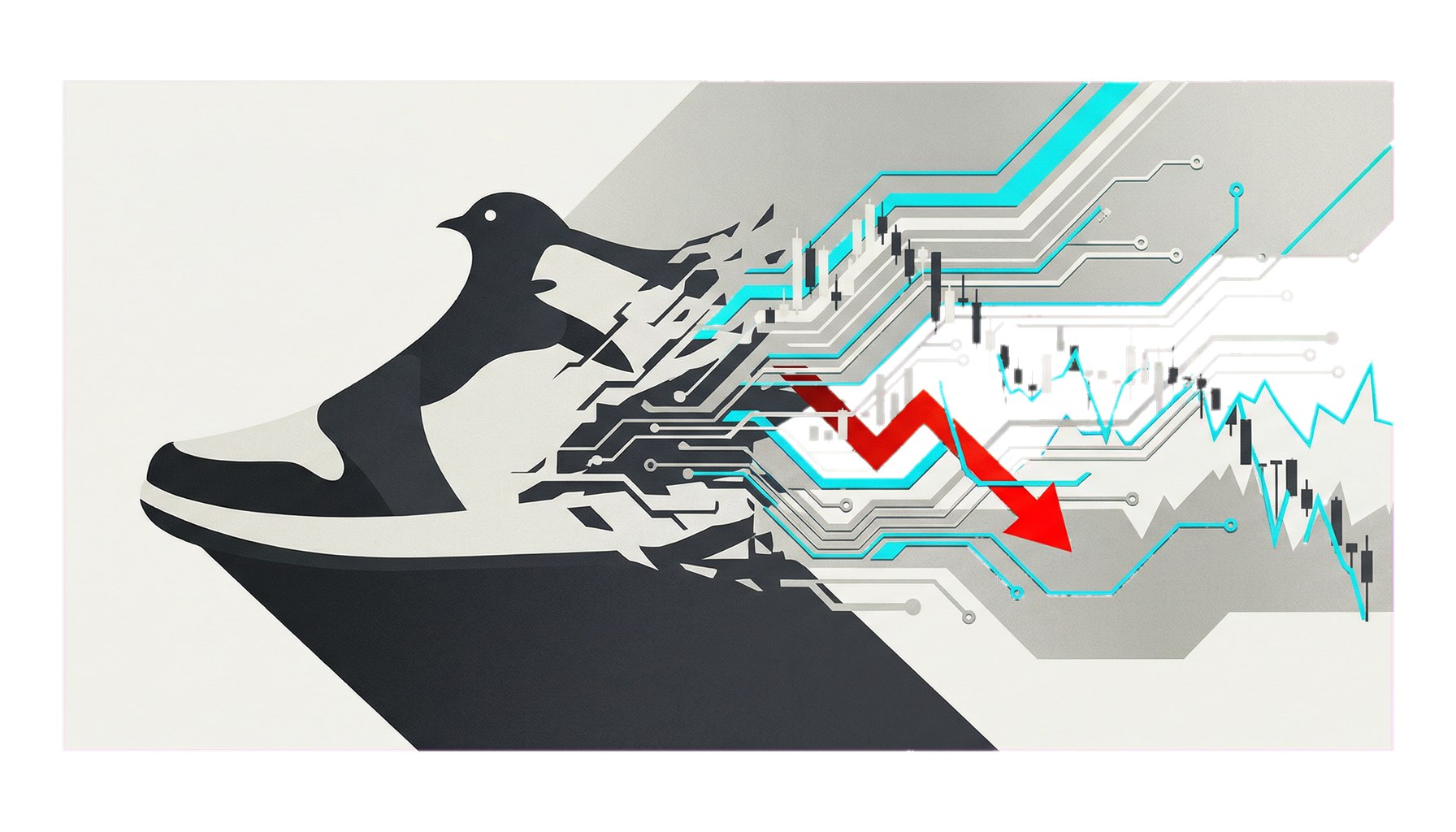
Allbirds’ decision to rebrand itself as NewBird AI is not a bold strategic reinvention. It is the kind of grotesquely transparent desperation move that only works in a market so intoxicated by a narrative that it mistakes costume changes for transformation. According to reports on April 15, the former shoe company said it would pivot away from footwear toward AI computing, raise $50 million, and adopt a new identity built around the two letters currently capable of erasing almost any investor memory.
The stock surged accordingly. That, more than the announcement itself, is the real story. A struggling company that spent years proving it could not sustain a premium sneaker business has apparently discovered that the fastest path to market forgiveness is not execution, discipline, or cash flow. It is branding theater.
That should alarm anyone still pretending this cycle is governed by sober capital allocation. Allbirds was once a market darling, the eco-conscious footwear brand that floated into the public market in 2021 wrapped in the soft glow of sustainable consumerism. Its market value briefly touched about $4.1 billion after its debut, a valuation that now looks like a period piece from the age of free money and low standards.
By 2026, that empire of wool sneakers and lifestyle messaging had largely collapsed. Reuters reported that the company had lost roughly 99% of its market value before the AI announcement. CNN noted that even after the latest frenzy, the company remained only a shell of its former self. In other words, the market had already rendered a verdict on the underlying business. What changed was not the economics. What changed was the buzzword.
The most embarrassing part is that none of this is even original. This is the Long Blockchain Corp. stage of the AI bubble, the moment when the speculative fever stops pretending to be selective. In December 2017, Long Island Iced Tea renamed itself Long Blockchain and its shares exploded, not because it had discovered a defensible technology advantage, but because the market at that moment was willing to reward almost any company that could force the word blockchain into a headline.
Around the same time, Eastman Kodak announced a blockchain and cryptocurrency initiative, and its shares more than doubled. Go back further and the pattern gets even more ridiculous: during the dot-com mania, companies that bolted .com, .net, or “Internet” onto their names enjoyed abnormal positive stock reactions simply because investors were desperate to believe they were glimpsing the future. We have seen this movie before. The props change. The gullibility does not.
What makes the Allbirds episode especially damning is the sheer absence of plausible continuity. At least some historical pivots tried to gesture toward adjacent capabilities, however weakly. Here, the leap is from shoes to AI infrastructure, from selling sneakers to selling compute. This is not corporate evolution. It is a reverse-engineered stock promotion narrative assembled from the most marketable nouns available. Reports describing a plan to become a GPU-as-a-Service or AI-native cloud platform only sharpen the absurdity.
Building durable infrastructure businesses requires capital intensity, technical depth, operational excellence, customer trust, and usually years of painstaking execution. It does not emerge by declaration from the wreckage of a failed direct-to-consumer footwear brand.
Jim Cramer’s reported verdict — “ridiculous” — is one of the few proportionate reactions this story has received. But even that word may be too gentle, because ridicule suggests the market merely looks silly. The deeper problem is that markets in moments like this become actively misleading. Price stops functioning as a rough signal of future productive capacity and starts functioning as a referendum on which slogan most efficiently activates speculative reflexes.
Once that happens, capital gets pulled toward theatrical pivots and away from real builders, real operators, and real technological progress. A market that rewards a distressed shoe company more for renaming itself around AI than for ever making a decent business is not identifying value. It is advertising credulity.
There is, of course, a standard defense of this kind of mania: yes, there will be excess, but genuine technological revolutions attract frauds and opportunists precisely because the underlying opportunity is real. That is true, as far as it goes. The internet was real. Blockchain had legitimate applications even as it became a carnival. Artificial intelligence is absolutely real, and its economic consequences will likely be enormous. But that is exactly why episodes like this matter.
They tell you when a transformative technology has become not just an industry, but a costume rental service for distressed assets. When the market sees “AI” and asks no further questions, the bubble is no longer early, experimental, or discerning. It is late, lazy, and begging to be exploited.
So no, the Allbirds-to-NewBird AI pivot should not be read as evidence of entrepreneurial agility. It should be read as a flare shot into the sky above a market that has once again lost the plot. Late-cycle manias always produce their own parody versions of innovation, and this one could hardly be clearer if it arrived wearing a sandwich board.
A company once valued in the billions for selling wool sneakers is now trying to sell an AI dream for $50 million, and investors cheered because the dream contains the right acronym. That is not a healthy appetite for growth. It is the unmistakable sound of speculative discipline giving way to farce.