 Written by Silvia Pavelli
Autonomous construction has a familiar appeal: machines that move earth, grade sites and haul material with less idle time and more predictable work. But the harder commercial problem is not whether a single machine can drive itself. It is whether autonomy can function across the mixed fleets that contractors already own, rent and maintain. Autonomous Solutions, Inc. (ASI) and SoftBank Group are making that interoperability question the center of a new joint venture announced September 24. ASI says the venture will develop and commercialize autonomous construction equipment for large infrastructure projects, while SoftBank separately invested $225 million in ASI to expand the company’s broader commercial operations.
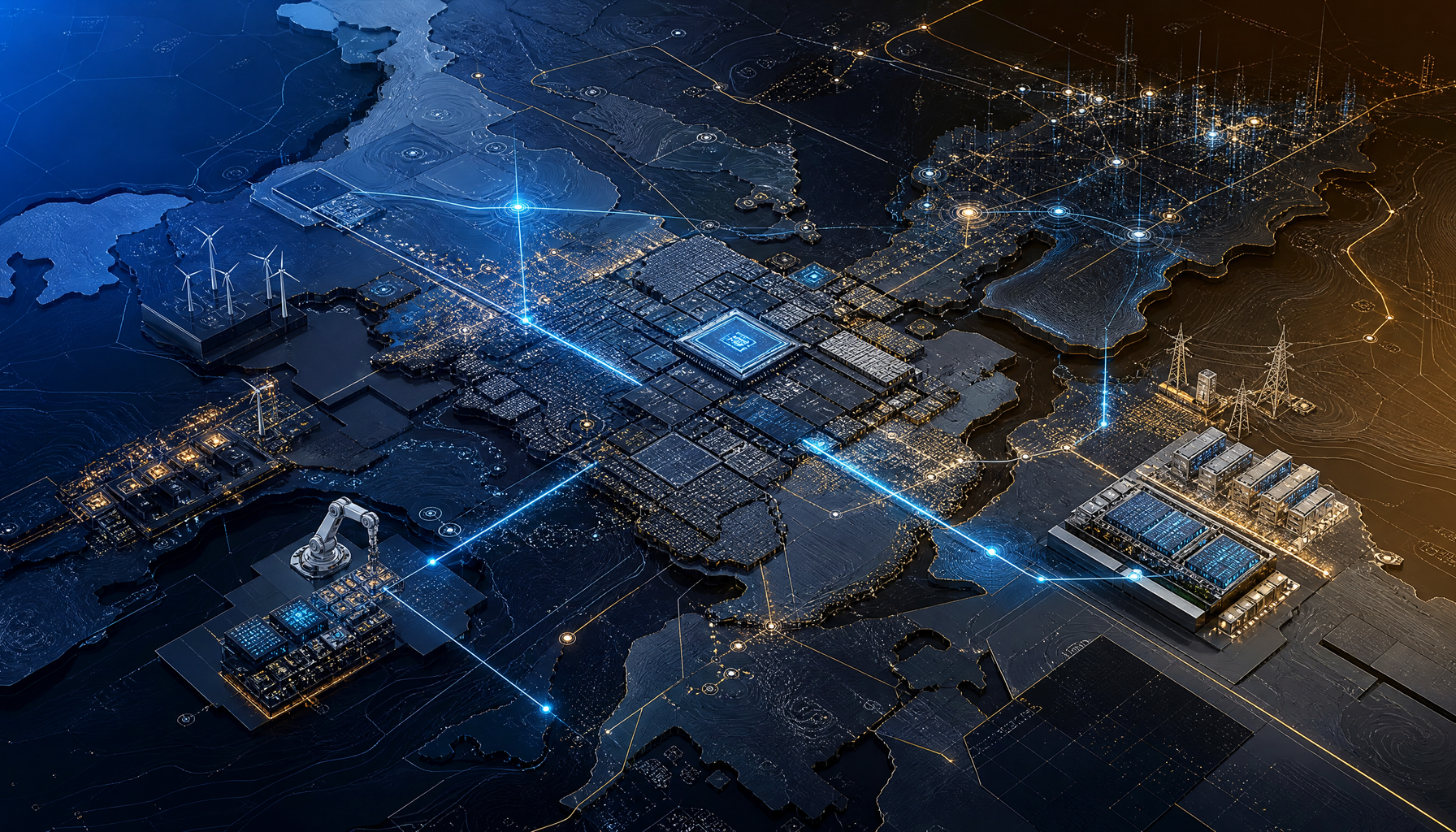
The release describes a venture focused on civil-construction and material-handling uses, including roadways, airports, railways and waste management. Its premise is ASI’s Mobius fleet-orchestration platform, which the company describes as original-equipment-manufacturer agnostic. In practical terms, that means the software is intended to coordinate mixed fleets rather than require a contractor to commit to one equipment brand or a closed autonomy stack. ASI lists haul trucks, dozers, loaders and compactors as examples. That ambition is strategically significant because construction sites rarely begin with a clean slate of identical machines.
An open fleet layer could lower adoption friction. A contractor that can retrofit or coordinate existing equipment may avoid a wholesale replacement cycle and reduce vendor lock-in. The $225 million investment can also help a young autonomy provider fund deployment, service and commercialization beyond a demonstration environment. But the announcement leaves essential commercial facts undisclosed. ASI does not state the joint venture’s capitalization, ownership split, governance, launch date, named customers, project backlog, production volume or a timetable for specific sites. The investment and the joint-venture capitalization are separate facts; the release does not put a dollar value on the latter.
Construction is also a more difficult autonomy setting than a managed warehouse. Terrain, dust, weather, changing site geometry, temporary routes, workers, subcontractors and conventional vehicles can all alter the environment by the hour. A mixed-fleet system must bridge differences in sensors, machine interfaces, braking behavior, maintenance schedules and safety certification. That makes orchestration a high-value layer, but it also makes it a high-consequence integration challenge. A software vendor can call a system autonomous without demonstrating that every task operates without supervision or that the same system is safe across all equipment and work conditions.
The missing metrics are therefore as meaningful as the funding headline. The announcement provides no autonomy level, intervention rate, uptime, utilization gain, productivity comparison, incident rate, safety validation or customer return-on-investment measure. It also does not say how remote supervision is structured, how responsibility shifts when a machine makes an unsafe decision, or what happens when a sensor, communications link or a connected vehicle fails. Those are not secondary implementation details; they determine whether an interoperability promise becomes an operational product.
Regulation will remain local and task-specific. Jobsite safety obligations, worker training, liability allocation and human-oversight requirements can differ across projects and jurisdictions. An autonomous machine operating within a controlled construction zone is not automatically approved for public-road travel, and a fleet-management layer does not remove the duty to manage people around heavy equipment. The next evidence should be named deployments, independent safety review, disclosed performance data and clarity on the operating model. Until then, the announcement is best read as a well-funded bid to solve the jobsite integration problem—not proof that autonomous construction fleets have already scaled.